Aug 26, 2026Buying Guides
How to Choose the Right Band Saw Blade for Bone Saw Machines
Selecting blades follows this order: **confirm machine specifications → identify cutting materials → select thickness & TPI → check material & craftsmanship → avoid low‑quality traps
Step 1: Critical Machine Specifications (Wrong size = cannot fit)
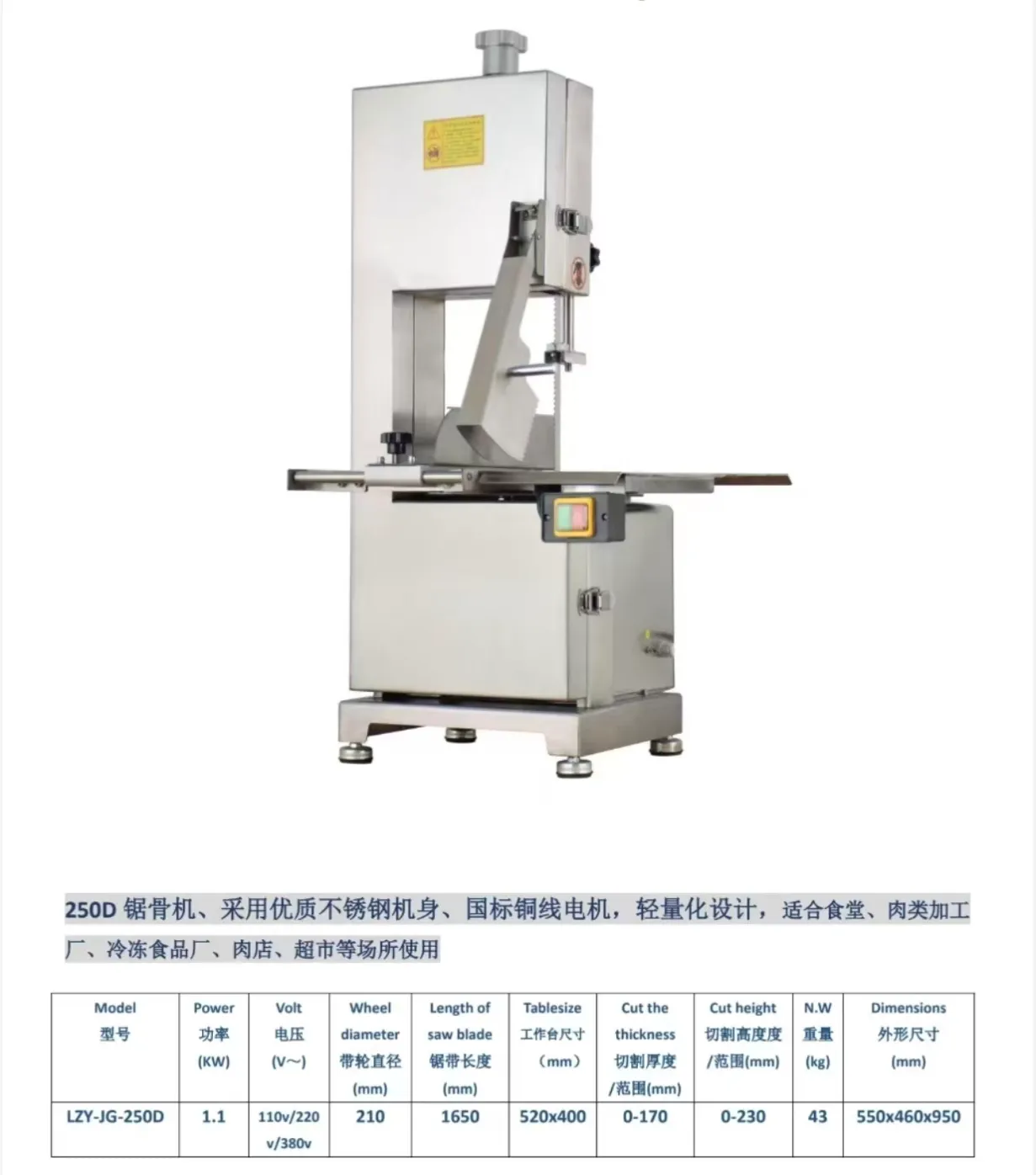
- Length: Must strictly match your bone saw machine. Common sizes: 1650, 1981, 2489, 2946 mm. Even a few millimeters deviation will cause blade wandering or breakage. Check the machine nameplate or marking on your old blade.
- Width: Common sizes 16 mm, 19 mm. Determined by machine guide blocks. Do not arbitrarily use wider or narrower blades.
Machine parameters come first. Excellent blades won’t work if dimensions are incorrect.
Step 2: Thickness Selection (Balance durability & meat loss)
表格
Thickness | Application | Features |
|---|---|---|
0.56 mm | ‑18℃ deep‑frozen large bones, beef marrow bones, sheep leg bones, heavy‑duty slaughterhouses | Best impact resistance, low breakage risk; wider kerf, higher meat loss |
0.50 mm | Ribs, pork trotters, frozen meat blocks, poultry. General‑purpose for market | Balanced service life & material loss. Widely used in butcher shops & processing plants |
0.45‑0.40 mm | Fresh meat, beef steaks, frozen fish, fine portioning | Narrow kerf, less meat waste; NOT for hard heavy bones, prone to snapping |
0.36 mm | Snow‑flake beef, premium fine cutting | Minimum material loss; for soft materials only. Never use on hard bones |
Quick rule: Thicker blades for hard frozen bones; thinner blades for fresh fine‑cutting.
Step 3: TPI (Teeth Per Inch), controls cutting speed & cut surface
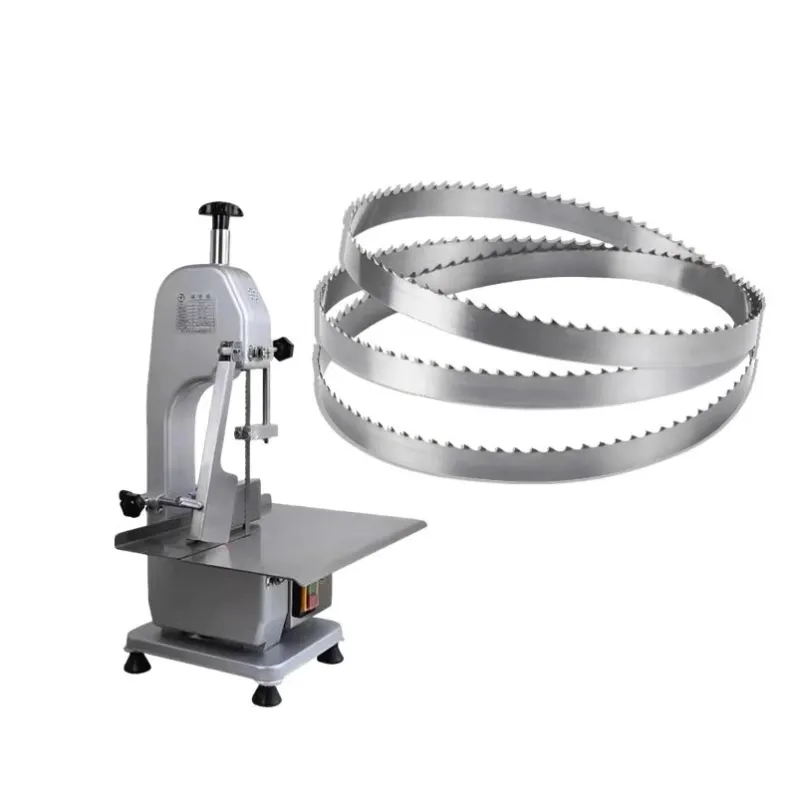
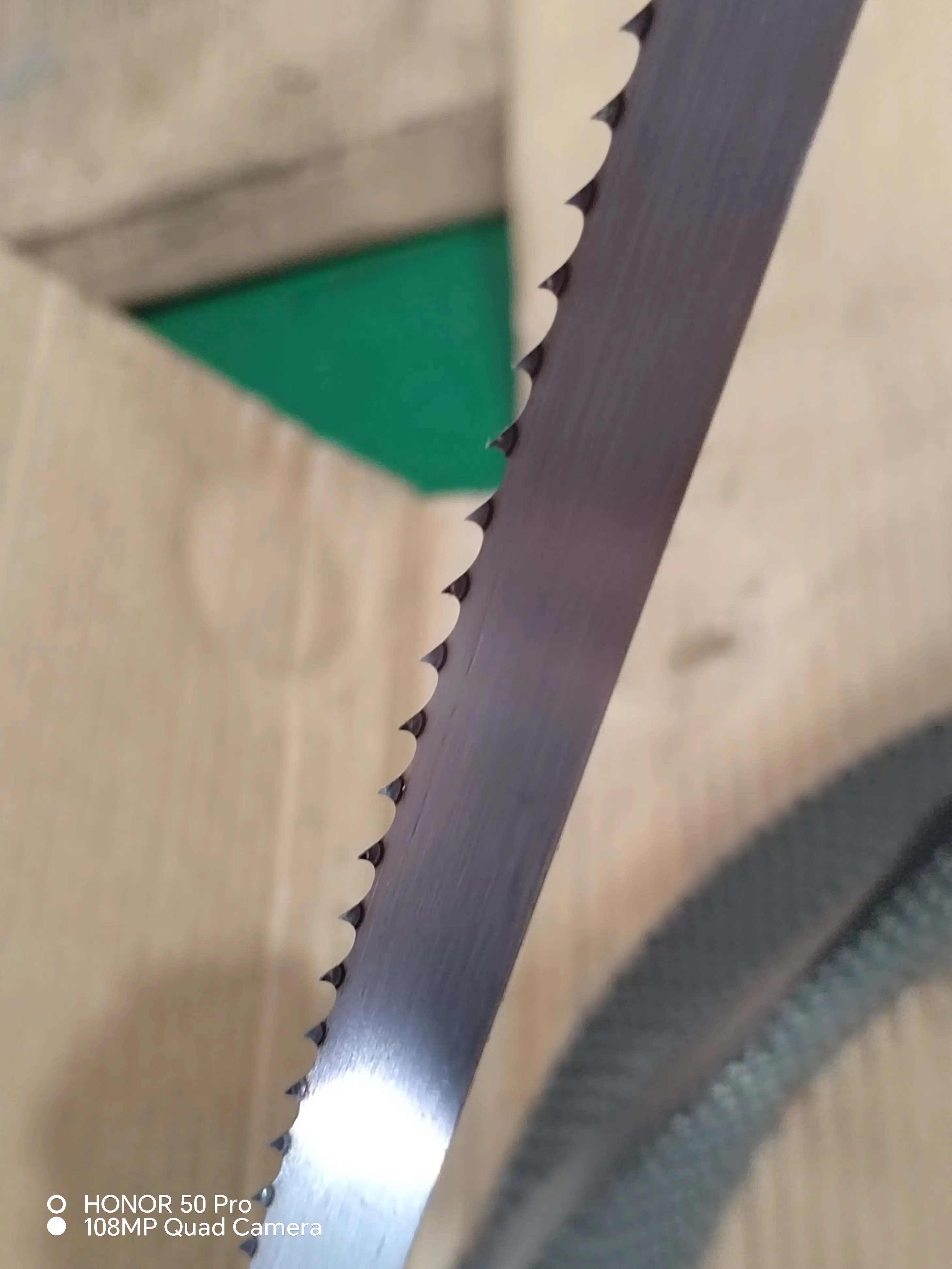
‑ 3 TPI (Large teeth): Large gullet for fast chip removal. For frozen large beef & sheep bones. Fast cutting; slightly rough cut surface. ‑ 4 TPI (Small teeth): Most versatile. Fresh meat, ribs, poultry, semi‑frozen products. Smooth cut surface, minimal bone chips. Top choice for daily butcher work.
Do NOT use fine‑tooth blades on heavy frozen bones: chip clogging, burnt teeth and rapid dullness will occur. Coarse‑tooth blades produce excessive bone chips on fresh meat.
Step 4: Blade Material
- Premium grade: CK75 / SK5 high‑carbon steel Vacuum heat‑treated, hardness 60‑65 HRC. Balances sharpness and shock resistance, resists tooth chipping and edge curling when cutting frozen bones. Clean surface with good rust resistance, meets food‑grade hygiene standards. Suitable for wholesale and export orders.
- Low‑cost inferior blades: Recycled steel strips, simplified heat treatment. Hardness is falsely marked. Appear identical externally but go dull or chip after short‑time cutting. Avoid ultra‑low‑price goods.
Step 5: Weld Joint Quality
The weld joint is the most frequent breaking point. Good welding is flat and smooth with proper stress relief. Rough, bulging or cracked joints lead to frequent blade fracture.
Practical Usage Tips
Even top‑quality blades perform poorly without correct operation:
- Set proper blade tension: Over‑tight causes breakage; over‑loose leads to slipping and tooth wear.
- Replace worn guide blocks. Vibration from worn guides damages blades rapidly.
- Run‑in new blades at low speed first. Do not apply full load immediately.
- Do not force‑feed extra‑hard bones.
Short summary for catalog / website
Match length & width to your machine. Pick thickness and TPI according to your actual cutting materials. Prioritize high‑carbon steel with sound welding. Proper installation and running‑in maximize blade service life.