Aug 26, 2026Material Notes
Why Different Materials Require Different Saw Blades (Bone & Frozen Food Cutting Guide)
Many customers believe that one universal saw blade can handle all cutting tasks. In actual commercial and kitchen processing
Many customers believe that one universal saw blade can handle all cutting tasks. In actual commercial and kitchen processing, however,
using the wrong blade for different materials is the main cause of slow cutting, blade damage, rough cuts, and frequent replacement costs.
Every material — including pork bones, beef bones, frozen meat, and frozen goods — has unique hardness, toughness, and internal structure, which requires a matched blade tooth pitch, blade thickness, material hardness, and cutting geometry.
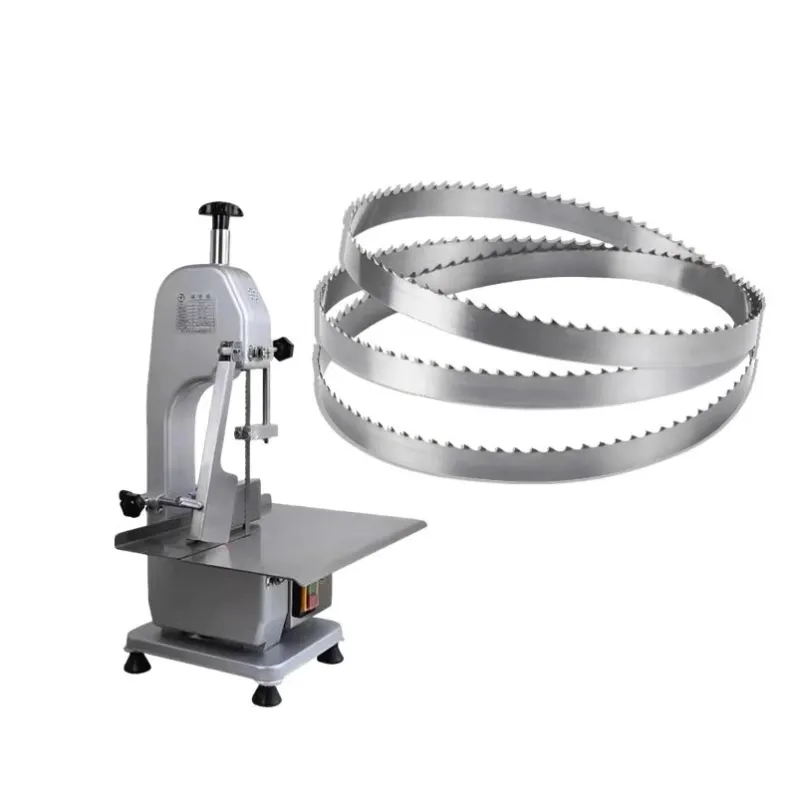
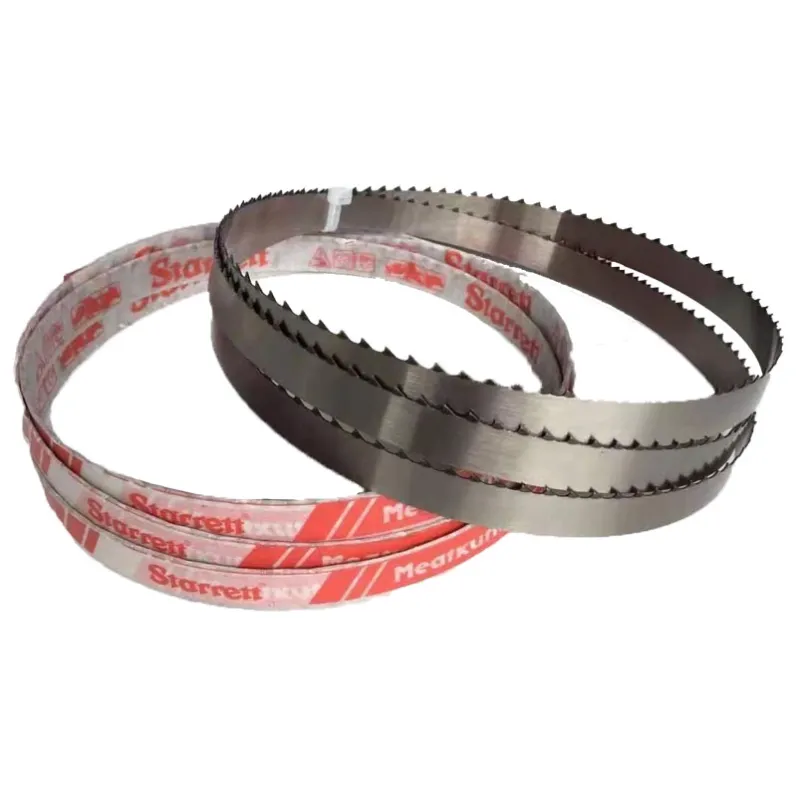
1. Hard bones (beef bones, pork bones) need heavy-duty impact-resistant bladesAnimal bones are hard, dense, and uneven in texture. They contain both hard cortical bone and soft cancellous tissue. If you use a standard thin or fine-tooth blade designed for soft materials, the teeth will easily hit hard bone surfaces, causing tooth breaking, blade bending, or blade jamming.Bone-cutting saw blades adopt thick blade body, reinforced tooth design, and large tooth spacing. This structure provides strong impact resistance, allows fast chip removal, and avoids stuck residues during high-load cutting. It ensures stable cutting force and prevents blade fatigue during long-time continuous bone processing.
2. Frozen meat and frozen goods need high-hardness anti-freeze sharp bladesFrozen food is extremely rigid and low-temperature brittle. Ordinary blades will become dull quickly under low-temperature friction. The biggest challenge of frozen material cutting is no edge chipping, no material tearing, and continuous sharpness in cold environments.Special frozen-food blades feature uniform tooth height, high-precision grinding, and excellent low-temperature toughness. They do not lose hardness in freezing conditions, deliver neat incision without burrs, and avoid crushing frozen meat texture. Using a common bone blade for frozen goods will result in rough, broken edges and serious material waste.
3. Why one blade cannot replace allEach saw blade’s core parameters (tooth count, tooth pitch, blade thickness, steel hardness, and heat treatment) are engineered for specific material characteristics.- Fine-tooth blades suit soft and thin materials but break easily on hard bones.
- Wide-pitch heavy-duty blades handle bones perfectly but cannot achieve smooth cuts on rigid frozen products.
- Ordinary steel blades wear fast in low-temperature environments, while professional food-grade blades maintain long-term stability.
4. The benefits of material-matched saw bladesChoosing the correct blade for each material brings obvious commercial advantages:• Higher cutting efficiency: No jamming, no repeated cutting
• Cleaner cutting surface: Neat edges, no material damage, better product selling appearance
• Longer blade lifespan: Reduce frequent replacement and save cost
• Higher safety: Avoid blade deformation, tooth breakage, and machine vibration risksFinal ConclusionSaw blades are not universal tools. Professional cutting requires professional matching.
For commercial kitchen processing, butcher shops, and frozen food factories, matching beef bones, pork bones, and frozen goods with dedicated saw blades is the simplest way to improve productivity, reduce loss, and maximize profit. We provide customized sizes and professional blade solutions for different cutting materials to meet your precise processing needs.